Sora in 60 seconds: what it was - and what is left
Sora 2 launched in late September 2025 as a combination of video generator and TikTok-style feed and became the most-downloaded app on the App Store within days; in early 2026 it was temporarily available in Europe as well. The videos were so realistic that a NewsGuard analysis coaxed misleading news clips out of the generator in 80 percent of test cases. In March 2026 OpenAI pulled the plug: the shutdown was announced on March 24, and since April 26, 2026 the app and web version are offline.
That does not mean Sora is gone. First, the API keeps running until September 24, 2026 - third-party services can still generate new Sora videos. Second, and more importantly: the hype months produced countless clips that keep being shared, re-uploaded and stripped of context on TikTok, Instagram, YouTube and in messengers. The question "is this a Sora video?" remains current - and has actually become harder to answer since the app died, because the original context is missing.
Sora or Sora 2 - which one are we talking about?
A quick note on naming, because the two keep getting mixed up: Sora was already the name of the first video model OpenAI presented in early 2024 and opened up to paying ChatGPT users in late 2024. The real explosion only came with Sora 2 in September 2025 - the much stronger model with its own app and TikTok-style feed. Practically every viral clip you run into today comes from that second generation.
For detection purposes the difference hardly matters: the watermark, the provenance data and the typical glitches below apply to both generations. So wherever this guide says Sora, it usually means Sora 2.
The Sora watermark - and why it is often missing
Videos downloaded from the Sora app carry a visible, moving watermark: a small cloud-shaped Sora logo that changes its position in the frame. If you see it, the case is clear. But do not rely on it, because the watermark has two known weaknesses. First, countless services remove it automatically - removal guides were among the most-searched Sora topics from day one. Second, videos generated through the API, which powers third-party services, also came without a visible logo.
So also watch for indirect traces of removal: slight blur or smearing that follows the wandering logo, softened image areas with no apparent reason, or a tight crop that cuts off exactly the typical logo positions. A missing watermark never proves a video is real.
The most reliable evidence: C2PA provenance data
Every Sora video was embedded with machine-readable provenance data following the C2PA standard - a kind of cryptographically signed label identifying OpenAI as the source. That is the strongest evidence there is: if the data is present and valid, the origin is established. Our check reads exactly these signals and shows you the finding in the result.
The catch is durability. Re-uploading to social platforms, screenshots, screen recordings and editing apps usually strip the metadata - leaving a clip with no provenance at all. So the rule is: present C2PA data is strong evidence, missing C2PA data is no evidence at all. How the standard works in detail is covered in our guide on C2PA, SynthID and watermarks.
Typical Sora glitches
Sora 2 clearly improved physics - balls bounce correctly, water flows believably. It is still not flawless. On close inspection, many clips give themselves away in recurring places:
- Text and logos: signs, on-screen text or jersey prints dissolve into fantasy characters or change between shots.
- Cuts and object permanence: objects vanish, duplicate or transform after a cut; clothing or hairstyles change details.
- Lips and audio: mouth movements almost, but not quite, match the speech; voices sound slightly detached from the room.
- Background people: faces in crowds look washed out, movements repeat in loops.
- Too-clean look: even lighting, flawless surfaces and an oddly steady camera where phone shake would be expected.
The Sora genres you should know
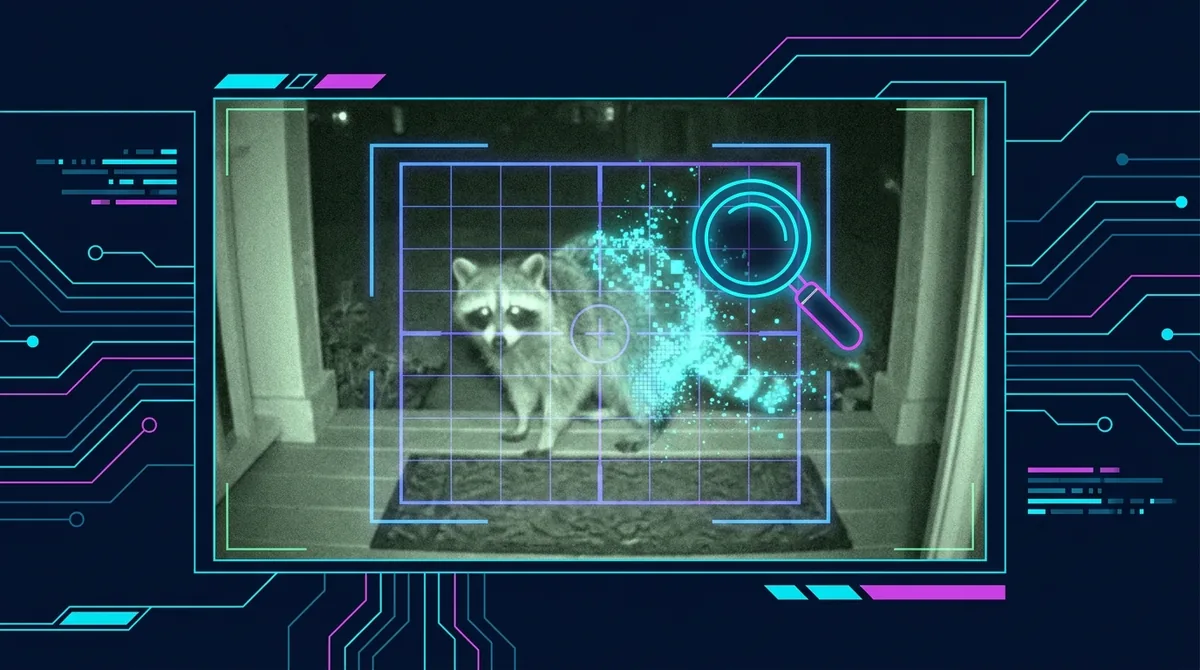
Certain formats reliably went viral with Sora and are still being recycled: supposed doorbell and security-camera footage (animals at the front door, nighttime "burglars"), bodycam scenes, street interviews with absurd answers and celebrity clips. If a spectacular clip of this kind shows up in your feed without a traceable source, chances are high it came out of a generator.
The security-camera look deserves particular scepticism: the grainy, dark night-vision image hides exactly the details that would normally expose AI, and the static camera forgives motion errors. In our checking practice, this genre is one of the most frequent candidates for "looks real, is not".
Cameo deepfakes: when real faces end up in Sora videos
The Sora app's cameo feature turned a short selfie scan into a digital copy of your face and voice that could be placed into any scene. The result: a wave of deceptively real clips of celebrities and private individuals - from a YouTube star's faked coming-out to invented statements by politicians. Security researchers also showed that the safeguards against impersonating other people could be bypassed.
These clips keep circulating, long detached from the app and often without a watermark. If a video of a real person seems off - out-of-character statements, slightly waxy skin, minimally offset lip movements - treat it as a possible deepfake and check it before you share it. You can find more in our deepfake guide.
How to check a suspicious video step by step
First: check the source. Who posted the video first, and do reputable outlets report the event too? Second: check what is visible. Watermark or traces of its removal, text in the frame, cuts, lips, background. Third: get a technical check. Upload the video to us or submit the link - we read provenance data like C2PA, look for forensic traces and let our trained models assess the material. You get an honest assessment with a probability, and if the evidence is not sufficient we say so openly instead of guessing.
Important for context: the check works most reliably with the original clip or a direct link. Screenshots and screen recordings destroy metadata and image signals - the closer to the original, the better the result.
After the shutdown: who fills the feeds now?
OpenAI has not announced a successor - internally, Sora only continues as a research project (as of July 2026). The demand for AI video has not gone anywhere, though; it is simply spreading out: to Google's Veo, which marks its output with the invisible SynthID watermark, to Kling from China, and to a growing number of freely available models where nobody enforces any labeling at all.
Your approach stays the same. The three steps above - source, visible signs, technical analysis - work no matter which generator a clip came from. For the signs that matter beyond Sora, see our guide on spotting AI videos.